

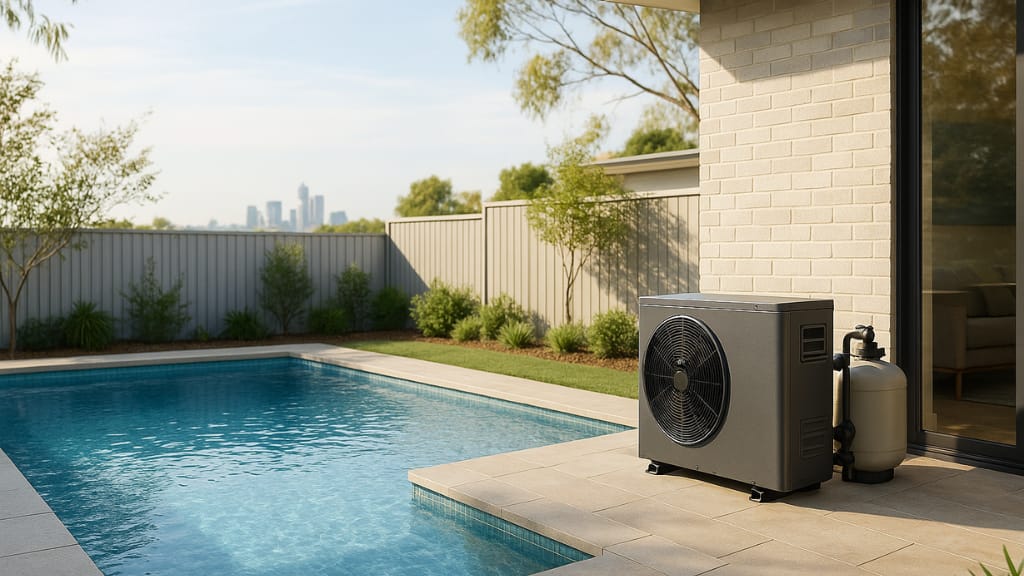
If you have a pool in Sydney (or anywhere in New South Wales), installing a pool heat pump is an excellent way to enjoy comfortable water temperatures year-round, without exploding your power bills. But not all heat pumps are equal. To make the right purchase, you need to think about your local climate, your pool’s size, running costs, and how you plan to use it. This guide helps Sydney pool owners understand what to consider before choosing a heat pump for pool heating.
Why the Correct Pool Heat Pump Is Important for Sydney
Efficiency & Cost Savings
Heat pumps work by extracting heat from the air and transferring it to the pool water, which makes them much more energy-efficient than electric element heaters or gas heaters. If you pick a properly sized model, you’ll maximise that efficiency, meaning lower electricity bills.
Rising Energy Prices in NSW
It’s especially relevant for Sydney because electricity costs in New South Wales are relatively high, according to Canstar, typical usage rates in NSW are around 33–37 c/kWh.
Moreover, recent regulatory changes mean that electricity prices in NSW are expected to rise by 8–9%.
Given these rising costs, an efficient pool heat pump can offer significant savings over time — especially compared to gas pool heaters.
Environmental Benefits
A heat pump doesn’t burn fossil fuels directly (unlike gas heaters), so it’s a greener way to heat your pool. This aligns well with many Australians’ growing emphasis on energy efficiency and sustainability.
Longer Swimming Season
With a well-sized heat pump, you can extend your swimming season. In Sydney’s climate, this can mean more comfortable swimming in the cooler months, without relying on gas or very expensive electric heaters.
Key Factors to Consider When Choosing a Heat Pump for a Pool in Sydney
1. Pool Size & Volume
The volume of your pool is one of the most critical metrics when sizing a heat pump. Larger pools need more heating capacity.
How to estimate your pool’s volume:
- Measure your pool’s length, width, and average depth.
- Multiply: Length × Width × Depth = Volume.
Then, a common rough sizing rule is:
Pool Volume ÷ 2,500 ≈ Required kW of heat pump capacity
This rule helps you get close to the right heat pump power so that the system can effectively heat your pool.
2. Sydney’s Climate & Its Effect on Heating
Sydney’s climate is relatively mild compared to many other parts of Australia. Summer days can be very hot, and even in winter, average daytime air temperatures are often comfortably warm. However, nights and early mornings can cool down, and “southerly busters” (sea breezes) can rapidly drop temperatures on some days.
These fluctuations impact how hard a heat pump has to work:
- On blisteringly hot days, the air has plenty of heat, making the heat pump very efficient.
- During windier or cooler periods (especially with strong breezes), heat loss from evaporation increases, meaning the pump may need to run longer or be more powerful.
If your pool is exposed to wind, or you swim in shoulder seasons, you may need a higher-capacity heat pump than someone whose pool is more sheltered or used only in summer.
3. Heat Loss: Pool Cover & Insulation
Heat loss is a major factor in how hard your heat pump has to work:
- Evaporation is the biggest form of heat loss for pools.
- Conduction (through the pool’s walls or ground) and radiation (heat lost to cooler air) also matter.
Using a pool cover or solar blanket dramatically reduces evaporation and heat loss. If you consistently use a cover, you may be able to size down your heat pump slightly — without compromising comfort.
Without a cover, or if you swim in the evenings, consider a more powerful model to make up for higher heat loss.
4. Efficiency Ratings (COP)
The Coefficient of Performance (COP) is a key number: it describes how many units of heat you get for each unit of electricity. Higher COP = more efficient heating.
Inverter-driven heat pumps are especially effective because they adjust their power output according to how much heat your pool needs, saving energy when full power is not required.
5. Heating Goals & Usage Habits
Think carefully about how you use your pool:
- Do you want to swim year-round, or just in the warmer months?
- What’s your ideal water temperature (e.g. 26 °C, 28 °C, or warmer)?
- How often do you swim — daily, weekly, or just during weekends?
If your goal is consistent comfort and frequent swimming, particularly in cooler months, it’s worth paying for a big enough, efficient heat pump.
6. Installation Matters
Even the best heat pump for a pool won’t run efficiently if installed poorly. Here are some installation tips:
- Allow airflow: keep at least ~30 cm clearance around the heat pump so the fan can draw in air freely.
- Avoid obstructions: no fences or walls blocking airflow.
- Locate the heat pump close to your pool’s filtration system: shorter piping means less heat loss and better efficiency.
- Hire a qualified installer: correct electrical wiring and plumbing are essential for performance and safety.
Is a Pool Heat Pump Worth Funding in Sydney?
Considering rising electricity rates in Sydney, a pool heat pump very often delivers a strong return on investment. Here’s why:
- Lower Operating Costs: Heat pumps can cost far less to run than gas heaters. According to Australian comparisons, using a heat pump (especially with a pool blanket) can reduce running costs by 40–70% compared to gas.
- Longer Lifespan: Heat pumps typically last 10–15 years or more, so the initial cost spreads over many seasons.
- Environmental Payoff: Running on electricity means fewer emissions than gas, especially if your home uses or can integrate renewable energy.
- Mitigated by Rising Energy Prices: With power prices in NSW increasing, efficiency becomes more valuable. An efficient pool heat pump is more attractive when each kWh costs more.
The combination of installation cost, energy savings, and environmental benefits often justifies the investment — especially if you swim regularly or want to maximise your pool’s usability.
Final Thoughts
For pool owners in Sydney, investing in a pool heat pump is an intelligent move — especially with rising electricity prices, temperature fluctuations, and a growing desire for energy-efficient living. By considering important factors like pool size, local climate, heat loss, and usage patterns, you can choose a heat pump for pool that offers excellent performance, lower running costs, and long-term value. If you need guidance on selecting the right system, you can always consult a local pool heating specialist to compare options suited to Sydney conditions. With the right unit installed correctly, your pool becomes more than just a summer luxury — it becomes a comfortable, year-round retreat.

