Over the past year, a new phrase has quietly entered the builder and startup vocabulary.
Vibe coding.
It sounds appealing. Almost poetic.
The idea that you can describe what you want, follow intuition, let AI handle the complexity, and ship something real in hours instead of weeks.
And on the surface, it looks like it works.
Social feeds are full of posts claiming entire products were built in a day.
Landing pages show impressive demos.
Repositories appear overnight.
Screenshots look polished.
Stories spread fast.
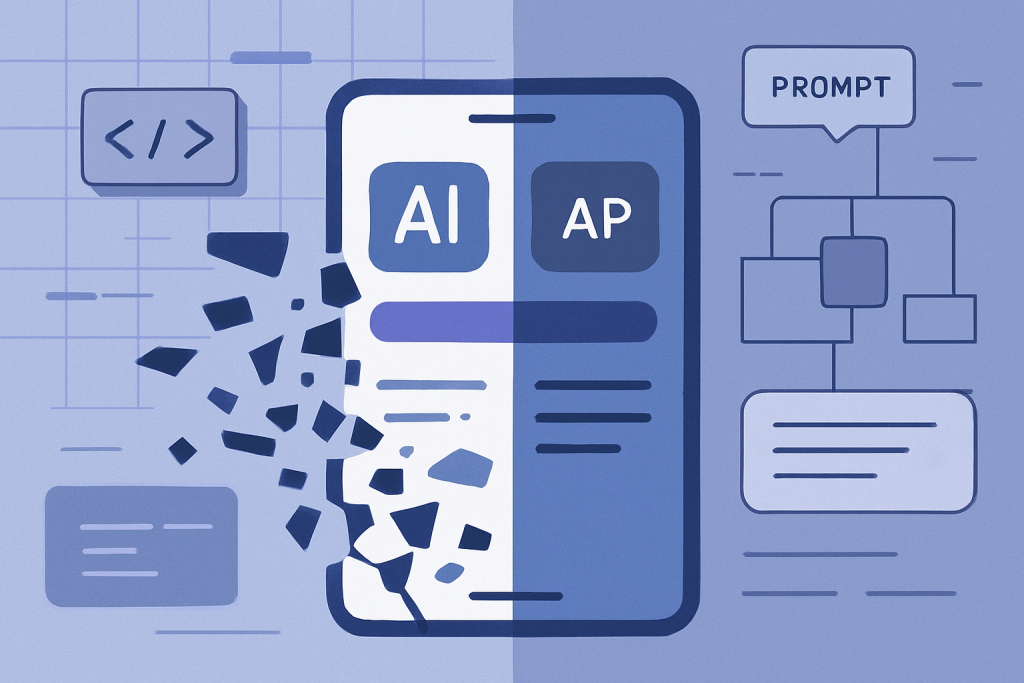
But when you actually try many of these so-called vibe-coded sites and projects, something feels off.
Buttons don’t work.
Auth breaks.
Emails never arrive.
Data doesn’t persist.
Edge cases destroy the experience.
That gap between how it looks and how it works is where the real story of vibe coding lives.
What Vibe Coding Really Means in Practice
At its core, vibe coding is not a new technology.
It’s a mindset.
Instead of starting with architecture, requirements, and systems thinking, the builder starts with intent.
“I want something that does this.”
“I want it to feel like that.”
“I want users to experience this flow.”
AI tools then translate that intent into code, interfaces, and logic.
This approach is powerful for ideation and speed.
It lowers the barrier to entry.
It helps non-engineers build things they never could before.
But vibe coding optimizes for momentum, not robustness.
And that distinction matters.
The Pattern Across Many Vibe-Coded Projects
When you look at many of the popular vibe-coded projects making rounds online, a pattern emerges.
One project positions itself as an open source community feed built entirely by AI in under a day.
Another turns digital playlists into physical memorabilia.
Another is a reflective tool that lets you leave messages for your future self.
Another is a marketing calculator designed to capture leads.
Another set focuses on automation agents for niche growth tasks.
Another tracks updates from a popular content ecosystem.
All of these ideas are genuinely interesting.
Some are clever.
Some are emotionally resonant.
Some are commercially viable.
But when you actually use them, many share the same weaknesses.
Why So Many Vibe-Coded Apps Feel Broken
The issue is not that AI can’t write code.
It absolutely can.
The issue is that apps are not just code.
Apps are systems.
And systems require decisions that vibe coding often postpones or ignores.
Here’s where things usually break.
User management is fragile
Login flows work in demos but fail under real usage.
Session handling is inconsistent.
Permissions are unclear.
Edge cases cause silent failures.
Data integrity is shallow
Data saves during happy paths but breaks when users behave unpredictably.
No real validation.
No migration strategy.
No recovery logic.
Integrations are incomplete
Email confirmations never arrive.
Payment webhooks fail quietly.
Third-party APIs work once and then hit limits.
Error handling is minimal
When something goes wrong, the app does not know how to respond.
No logs.
No alerts.
No fallback.
From the outside, it looks like a product.
Underneath, it’s closer to a prototype.
The Core Limitation of Vibe Coding Today
Vibe coding excels at generation, not governance.
AI can generate interfaces, logic, and flows very quickly.
But it does not naturally enforce:
Security models
Scalability decisions
Operational resilience
Compliance constraints
Long-term maintainability
Those things don’t emerge from vibes.
They come from systems thinking.
And that’s why many vibe-coded projects feel impressive but fragile.
They are built to be shown, not sustained.
Why This Doesn’t Mean Vibe Coding Is Useless
This is an important distinction.
Vibe coding is not a failure.
It’s just being misunderstood.
It is excellent for:
Idea validation
Rapid prototyping
Internal tools
Side projects
Learning and experimentation
Where it struggles is when people treat it as a shortcut to production-grade software.
It is not that yet.
The Platforms Powering Vibe Coding and Their Tradeoffs
Behind most vibe-coded projects sit a handful of platforms that make this movement possible.
These platforms are genuinely impressive.
But they come with constraints that builders often discover too late.
AI first code editors
These tools shine when refining logic, generating boilerplate, and accelerating development inside an existing codebase.
They are excellent copilots.
But they assume you already understand architecture.
They don’t replace system design.
They amplify whoever is holding the keyboard.
Most operate on monthly subscriptions that scale with usage and features, which becomes expensive as projects grow.
Browser based full stack generators
These tools promise end-to-end app generation directly in the browser.
They are incredible for demos.
They struggle with complexity.
Once you need custom auth flows, granular permissions, or non-standard integrations, friction increases fast.
Pricing usually shifts from free tiers to monthly plans once deployment, storage, or compute is required.
Rapid prototyping platforms
These platforms are optimized for speed.
You can go from idea to interface in hours.
But prototypes are not products.
Moving from prototype to production often requires rewriting large portions of the app or exporting code into a more traditional environment.
Monthly costs are manageable early, but real usage pushes builders into higher tiers quickly.
Prompt to deploy environments
These environments reduce friction dramatically.
Type what you want.
Get a live app.
But they abstract away complexity that eventually matters.
When something breaks, debugging becomes harder because you didn’t build the underlying system.
Again, monthly pricing increases once you exceed basic limits.
The Free Option That Isn’t Really Free
There is also a powerful free option in this space.
A tool that gives you access to advanced AI models and experimentation without direct cost.
On paper, it looks perfect.
In practice, it comes with a tradeoff.
This tool gives you raw capability, not a finished platform.
You still need to:
Build user management
Handle authentication
Set up databases
Integrate email services
Manage hosting
Implement security
Handle scaling
For developers, this is freedom.
For non-technical builders, this is friction.
The tool is free, but the work is not.
Why Fully Functional Apps Still Cost Something
There is a hard truth many vibe coding narratives avoid.
Fully functional apps require ongoing effort.
Infrastructure costs money.
Maintenance costs money.
Security costs money.
Support costs money.
AI can reduce the cost of creation.
It cannot eliminate the cost of responsibility.
When platforms charge monthly fees, they are not just selling AI.
They are selling reliability, hosting, support, and abstraction.
That’s why serious tools are rarely free forever.
Also Read: More AI Blogs
So Is Vibe Coding Not Ready Yet
Vibe coding is ready for what it is.
It is not ready for what people want it to be.
It is ready to help people build ideas.
It is not ready to replace engineering discipline.
The moment an app needs:
Real users
Real money
Real trust
Real uptime
Vibes must give way to structure.
The Real Future of Vibe Coding
The future is not vibe coding versus engineering.
It is vibe coding plus engineering.
AI will continue to accelerate creation.
Human judgment will continue to govern systems.
The winning builders will be those who use vibe coding to move fast early and then slow down to build correctly.
Not those who believe vibes alone are enough.
Final Thoughts
The current wave of vibe-coded sites teaches us something important.
Building is easier than ever.
Shipping is faster than ever.
But responsibility has not disappeared.
If you try many vibe-coded projects today and find them half-working, that’s not a failure of AI.
It’s a reminder.
Products are more than code.
And systems still matter.
Vibe coding is not the end of software development.
It is the beginning of a new layer.
And like every new layer, it needs time to mature.