When marketers talk about title tags, content strategy, or SEO, they often focus on visible parts — keywords, links, meta tags. What many miss is a deeper engine running behind the scenes: Google’s internal systems that evaluate which content deserves to show. One of those hidden systems is informally referred to as “Goldmine.”
The idea of “Goldmine Search Content” is about creating the type of content that wins in Google’s internal competition — not just in terms of relevance, but quality, trust, and user satisfaction. In this post, I’ll show you how Goldmine works (in concept), why it matters more than ever, and how you can optimize your content to be picked as “Goldmine content.”
What is Google’s Goldmine (in SEO terms)?
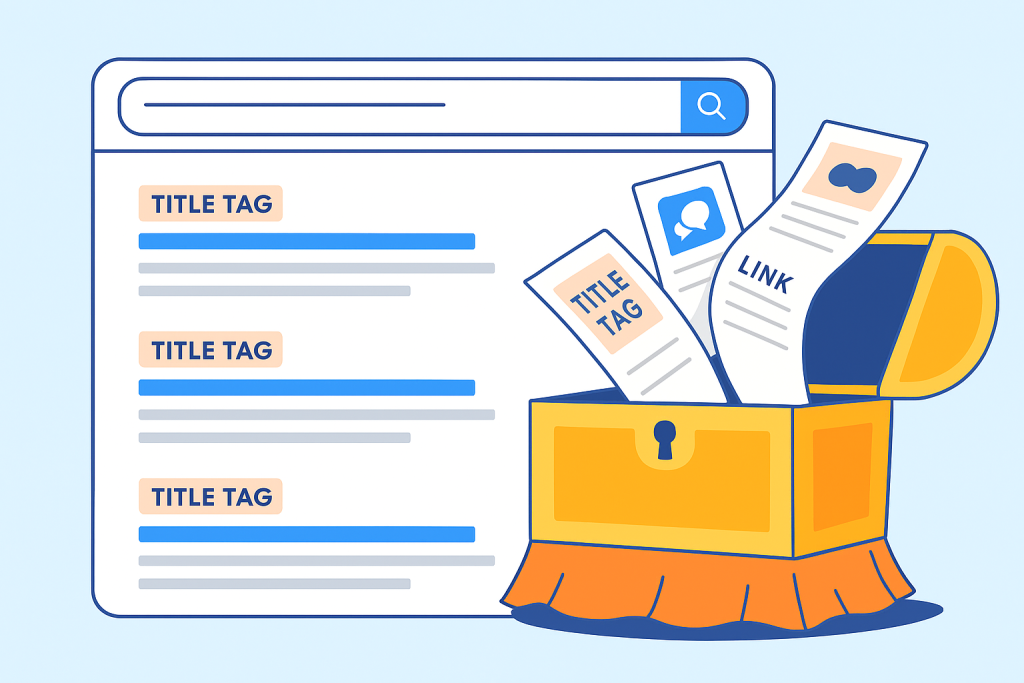
“Goldmine” isn’t a public Google product name; it’s a concept drawn from leaks, experiments, and SEO observations — the notion that Google doesn’t simply display what you publish, but chooses among many candidate titles, snippets, and content blocks, then promotes the version it deems highest quality.
In practice, that means your title tag, your heading (<h1>), your snippet, the anchor text linking to you, and even internal consistency all become candidates competing for the “Goldmine” slot. Google picks from the candidate pool — the one that best matches the user’s intent and promises minimal “bait-and-switch.”
So when I say “Goldmine Search Content,” I mean content constructed so well — thematically, semantically, structurently — that all candidates (title, snippet, h1, content) point to the same promise, reducing friction in Google’s decision process.
Why Goldmine Content Matters More Today
- Title rewrites are common now
Google often replaces your specified title with one of its own if it believes a better option exists. This means your control is partial. The better your piece aligns with what Google considers high-quality, the less likely your title will be overwritten. - User behavior is a ranking signal
Clicks, dwell time, pogo-sticking (users returning quickly) influence which candidate emerges. If your content satisfies, it gets rewarded. - Fragmented content sources
Google may pull snippet text, headings, or link text from across your page (or even from other sources) to assemble a “result” that balances readability and relevance. When your page is internally consistent, it’s more likely the snippet matches what you want. - Competition is stiff
In any niche, dozens of pages are vying for the same search. Goldmine content gives you an edge because you’re not just optimizing one tag — you’re creating a coherent system-of-signals that compete as a package.
How to Create Goldmine-Level Content
To align with what Google’s internal systems (like Goldmine) prefer, follow these guiding principles:
1. Align Title, H1, and Intro
Don’t scatter themes. If your title promises “SEO Secrets for 2026,” your H1 and first paragraph must reinforce that exact promise. Consistency reduces risk of Google rewriting your title.
2. Front-load Your Keyword Naturally
Put your primary keyword or phrase early in the title and early in your content, but do it in a natural, reader-friendly way. For example:
“Goldmine Search Content: How to Optimize for Google’s Internal Quality Engine”
rather than stuffing “Goldmine Search Content Google” unnaturally.
3. Use Semantic Support
Include related terms, synonyms, and context words. If your topic is “Goldmine Search Content,” also cover ideas like “snippets,” “title candidates,” “SERP optimization,” “user intent,” and “behavior signals.” This helps Google see your page as semantically rich.
4. Strong Opening Snippetable Text
The first few sentences are often candidate text for snippets. Make it readable, explanatory, and answer the core question: “What is Goldmine Search Content?”
5. Consistent Internal Linking with Descriptive Anchor Text
When you link internally from other pages, use anchor texts closely related to your content. That helps link signals reinforce your candidate titles. Avoid generic “click here” links.
6. Use Structured Headings & Clear Sections
Headings (H2, H3) should clearly describe sections. If Google considers headings as candidate sources, letting them reflect the promise helps maintain alignment.
7. Content Depth + Purpose
Provide helpful depth — practical steps, examples, context, comparisons. Don’t just scratch the surface. Users and Google rewards substance.
8. Monitor and Iterate
Once published, track how Google displays your title/snippet. If it’s consistently rewriting it, adjust your on-page elements to better reflect what Google favors. Use A/B testing in title variants if possible.
A Sample Walk-Through: Goldmine in Action
Imagine you write a post titled:
“Goldmine Content: How to Rank for Google’s Hidden Quality Engine”
You set your H1 almost identical. In your intro you clearly define Goldmine, why it matters, and how to align with it. You include semantic terms like “snippet generation,” “title candidates,” “anchor text influence,” etc.
Then internal pages (your own blog) use anchor text like:
“learn more about Goldmine content strategy”
When Google crawls this page, it sees multiple signals:
- Title: “Goldmine Content: How to Rank…”
- H1: “Goldmine Content: How to Rank…”
- Internal link & anchor pointing to it
- Snippetable intro
All consistent. So among candidate titles & snippet choices, your preferred version is strong, and Google may choose it as the SERP title rather than rewriting it badly.
Common Mistakes That Neglect Goldmine Strategy
- Having a title that promises one thing, but the content delivers another.
- Using wildly different wording in the H1 vs title tag.
- Relying on generic anchor text from internal links.
- Letting your intro start off in a different direction than your title.
- Not adjusting your title or headings even when Google rewrites your version.
When your page is internally inconsistent, Google’s candidate pool becomes confusing, and it may pick a version you don’t favor.
Also read: Exploring the Real Impact of Parasite SEO on Your Website’s Rankings
Final Thoughts: Win the Goldmine
“Goldmine Search Content” isn’t a trick or shortcut. It’s a mindset — treat your content like a package of aligned signals rather than isolated pieces. When your title, headings, snippets, links, and content all sing the same tune, your chances of being selected by Google’s internal quality engine go way up.
In 2025 and beyond, SEO is less about stuffing keywords and more about orchestrating signal harmony. Focus on clarity, value, consistency, and user satisfaction — that is how you win Google’s Goldmine.
Would you like me to build you a template/checklist for Goldmine content you can apply to your site posts?